Lastchild: The Modern Script for Authentic Brand Stories
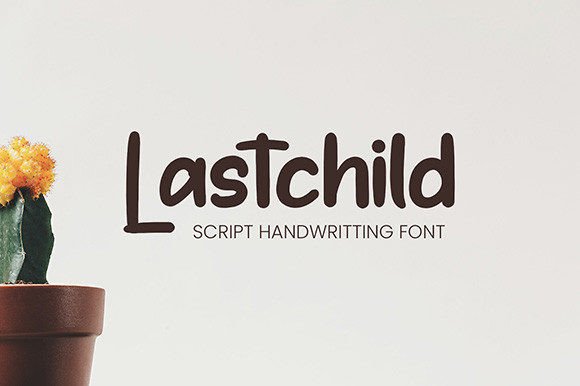
In the world of digital communication, where pixels often feel cold and uniform, the human touch is becoming a rare commodity. We scroll through feeds filled with geometric sans-serifs and rigid layouts, often feeling disconnected from the brands behind the screens. This is exactly where Lastchild enters the conversation. It is not merely a typeface; it is a bridge between digital precision and organic, human emotion. Designed as a modern handwritten font, Lastchild captures the fluidity of natural handwriting while maintaining the legibility required for professional design assets. It brings a warmth that sterile fonts cannot replicate, offering a sense of intimacy and authenticity that resonates deeply with adult audiences ranging from twenty to fifty.
Visual Personality and Aesthetic Appeal
When you look at the Lastchild script font, the first thing you notice is its rhythm. Unlike rigid calligraphic styles that can feel dated or overly formal, Lastchild strikes a balance between casual elegance and structural integrity. The letterforms exhibit a natural bounce and flow, mimicking the slight imperfections of ink on paper. This organic quality is what gives the font its distinct personality. It avoids the scratchy, illegible look of some grunge fonts, yet it refuses the stiffness of corporate typefaces. It sits comfortably in the middle ground, offering a premium font experience that feels approachable.
The visual weight of Lastchild is versatile. Depending on the version or style you choose, it can range from a light, airy whisper suitable for wedding invitations to a bold, impactful statement perfect for logo design. The connection between letters is smooth, creating a cohesive word shape that aids readability even at smaller sizes. For designers, this means you can use it for short bursts of copy—like a blog header or a social media quote—without sacrificing clarity. The font’s aesthetic is inherently "modern," meaning it utilizes current trends in typography where curves are softened, and spacing is optimized for screen viewing, making it a highly effective web design asset.
Strategic Applications Across Industries
Understanding where to deploy a creative font like Lastchild is just as important as the font itself. Its versatility is its strongest asset, making it a valuable addition to the toolkit of entrepreneurs, marketers, and content creators alike. In the realm of brand identity, Lastchild shines when used to convey a brand's "human" side. For instance, a coffee shop might use it for their menu headers to evoke a cozy, barista-written vibe, while a lifestyle brand might use it on packaging design to suggest that the product was crafted with care rather than mass-produced by a machine.
Consider the impact on digital marketing. In a landscape dominated by aggressive sans-serifs, a well-placed script font can stop the scroll. Using Lastchild for social media graphics—specifically for quotes, testimonials, or sale announcements—adds a layer of emotional weight. It transforms a generic promotional post into a personal note to the follower. For bloggers and publishers, Lastchild serves as an excellent tool for editorial design. It works beautifully for pull quotes or chapter titles in digital magazines, breaking up the monotony of body text and guiding the reader’s eye through the narrative.
Furthermore, the font is highly effective in the stationery and invitation market. Whether you are designing digital invites for a corporate event or physical stationery for a small business, the handwritten style suggests exclusivity and personal attention. It moves beyond the standard "fancy" scripts and offers a contemporary edge that appeals to a modern audience.
Mastering Typography: Pairing and Hierarchy
A common pitfall for designers is overusing a script font. While Lastchild is beautiful, it requires context to truly shine. The key to successful implementation lies in font pairing. Because Lastchild is a display font with high personality, it pairs best with something neutral and structured. A clean sans serif font or a classic serif font provides the perfect counterbalance. For example, using Lastchild for a main headline (e.g., "Summer Collection") paired with a sans-serif like Montserrat or Lato for the sub-text creates a clear visual hierarchy. The script draws attention and sets the mood, while the sans-serif delivers the detailed information with maximum readability.
When evaluating the fit of Lastchild for a project, readability must be your north star. While it is a premium font, no typeface is universal. Avoid using Lastchild for long paragraphs of body copy; handwritten fonts are taxing on the eyes when read in bulk. Instead, reserve it for headers, call-to-action buttons, and decorative elements. Check the legibility of specific letter combinations—particularly the lowercase 'r', 'n', and 'm'—to ensure they don't blur together at the intended size.
Practical Guide for Designers and Business Owners
Before integrating Lastchild into your next project, a few practical considerations will ensure a smooth workflow. First, always review the character map and included styles. High-quality modern typography often includes stylistic alternates and ligatures—special connections between letters that make the handwriting look more natural. Toggling these on and off can drastically change the look of your design, allowing you to customize the text to fit specific brand voices.
Second, consider the commercial licensing. If you are a small business owner or a freelancer, ensure that the license covers your intended use, whether it is for a client’s logo, merchandise, or a website. Most premium font foundries offer different tiers; reading the fine print protects you and your client legally.
Finally, test the font in context. Mockup your designs on the final medium—be it a mobile screen, a t-shirt, or a business card—before finalizing. A font that looks great on a high-resolution monitor might lose detail on textured paper. By taking the time to pair, test, and refine, you transform Lastchild from a simple downloaded file into a powerful engine for brand recognition and audience engagement. It is a tool that, when used with intention, elevates the standard of design and brings a refreshing, human touch to the digital age.