Craftsman: The Modern Handwritten Font for Authentic Branding
Finding a typeface that feels both personal and professional can be a real challenge. You want something with character, a font that conveys warmth and authenticity without sacrificing clarity. This is where Craftsman enters the conversation. It’s a modern handwritten font designed to bridge the gap between casual script and functional typography, making it a versatile tool for a wide range of creative projects.
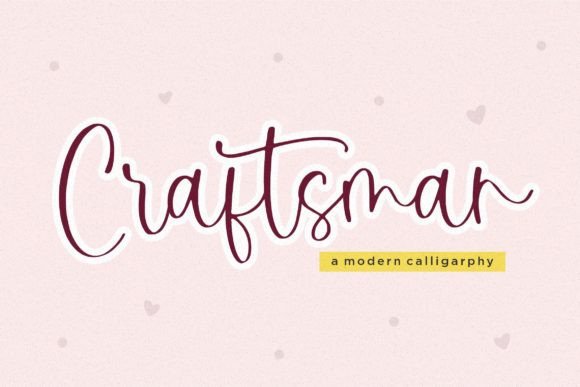
Unlike overly ornate or messy script fonts, Craftsman strikes a deliberate balance. Its letterforms are clean and legible, with a natural, flowing rhythm that mimics the consistency of a skilled hand. The strokes have a pleasant, organic variation, avoiding the sterile uniformity of many digital fonts. This gives it a human touch—something that feels crafted rather than generated. The overall personality is approachable, confident, and contemporary, making it suitable for projects that aim to connect on a more personal level with their audience.
Where Craftsman Truly Shines: Applications and Use Cases
The strength of a font like Craftsman lies in its adaptability. It’s not a one-trick pony meant for a single context. Instead, it can elevate various design scenarios, from commercial branding to personal creative endeavors.
Elevating Brand Identity and Packaging
For entrepreneurs and small business owners, building a recognizable brand identity is crucial. Craftsman works exceptionally well for logo design, especially for brands that want to emphasize craftsmanship, artisanal quality, or a personal story. Think of a boutique coffee roaster, a handmade cosmetics line, or a local bakery. Using Craftsman for the primary wordmark or key slogans immediately injects a sense of care and individuality.
In packaging design, the font can guide the viewer’s eye to important information. It’s perfect for highlighting product names, flavor descriptors, or heartfelt messages on labels and boxes. When paired with a clean sans serif font for body text, it creates a beautiful hierarchy that is both attractive and easy to read. The font’s modern style ensures it doesn’t feel dated or overly rustic, appealing to contemporary consumers.
Digital Presence and Content Creation
In the digital realm, standing out on crowded social media feeds is a constant battle. Craftsman is an excellent choice for creating impactful social media graphics. Use it for quotes, announcements, or call-to-action overlays on images and videos. Its handwritten style stops the scroll because it feels more personal and less corporate than standard typefaces.
For web design, it can be used strategically for section headers, pull quotes, or featured blog post titles. This adds visual interest and breaks up the monotony of long-form text. However, it’s important to consider readability at smaller sizes. Craftsman is best used as a display font for headlines or short phrases rather than for paragraphs of body copy, where a serif or sans serif font would be more comfortable for extended reading.
Print, Editorial, and Special Projects
The charm of Craftsman extends beautifully into print. For editorial design in magazines or lookbooks, it can add a personal touch to feature article titles or pull quotes. In publishing, it’s a fantastic option for book covers, particularly in genres like contemporary fiction, memoirs, or lifestyle guides where a human, relatable tone is desired.
Of course, its application in personal projects is just as valid. Wedding invitations, greeting cards, and event signage benefit from its elegant yet approachable style. It conveys celebration and thoughtfulness without being overly formal or difficult to decipher. The key is that Craftsman serves as a bridge—it provides the flair of a script font with a level of consistency that makes it a practical design asset.
Making Craftsman Work for You: Practical Considerations
Adopting any new typeface into your toolkit requires some thoughtful evaluation. Here’s how to approach integrating Craftsman into your workflow effectively.
Evaluating Fit and Testing Pairings
First, consider the project’s core message. Does your brand or project aim to feel innovative, personal, and hands-on? If yes, Craftsman is likely a strong candidate. If the goal is to appear ultra-minimalist, technical, or traditionally corporate, you might explore other modern typography options.
Next, experiment with font pairing. Craftsman rarely works well in isolation for full layouts. Its true power is unlocked when combined with a more neutral companion. A classic approach is to pair it with a geometric sans serif font for a clean, contemporary look. For a more traditional or editorial feel, try combining it with a readable serif font. The contrast between the expressive, handwritten Craftsman and a steady, structured partner creates dynamic visual hierarchy and keeps the design engaging.
Understanding the Font’s Features and Licensing
Before purchasing, review what’s included with the premium font. Does it come with multiple weights or styles (like regular, bold, or italic)? Are there alternate characters or ligatures that can add variety? These features can significantly expand its utility.
Crucially, understand the licensing. If you’re using Craftsman for client work, merchandise, or any commercial product, ensure you have the appropriate commercial font license. Most reputable font foundries offer clear licensing terms for desktop, web, and app use. Using a font correctly not only protects you legally but also supports the type designers who create these valuable tools.
A Final Word on Application
Remember that the effectiveness of any font, including Craftsman, depends on context and execution. Always test it in your specific design mockups. Check its readability on different backgrounds and at various sizes. Does it maintain its charm when scaled down for a website button? Does it remain legible on a busy product photo? Taking the time to test ensures that the font enhances your project rather than hindering it.
Ultimately, Craftsman is more than just a creative font; it’s a tool for adding a layer of human connection to your visual communications. By understanding its strengths and applying it thoughtfully, you can leverage its modern handwritten style to create more memorable, authentic, and effective designs across all your projects.