Missing Lovely: A Handwritten Font for Authentic Connection
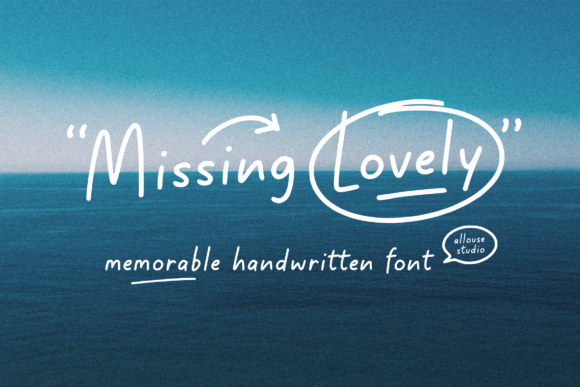
There's a moment in design when you know you've found the right typeface. It feels less like selecting a tool and more like meeting a collaborator who already understands the brief. Missing Lovely is that kind of handwritten font. It doesn't shout; it speaks with a clear, friendly voice that feels genuinely human. In a digital landscape crowded with cold, geometric sans serifs and predictable scripts, this font offers a breath of fresh air—a way to inject personality and warmth into your work without sacrificing clarity or professionalism.
The Visual Personality of Missing Lovely
At its core, Missing Lovely is a script font built on a foundation of balance and distinct character. Each letter is crafted with a gentle, flowing rhythm, but it's the careful construction that sets it apart. The strokes are consistent yet organic, avoiding the chaotic look of some handwritten styles. This makes it a premium font that feels both approachable and intentional. Its versatility is its superpower; it can feel playful in a social media post, elegant on a wedding invitation, or trustworthy in a brand's tagline. The letterforms have a slight, natural slant that guides the eye forward, creating a sense of movement and engagement. This isn't just a creative font; it's a tool for storytelling.
Where This Typeface Truly Shines
Understanding where to deploy a font like Missing Lovely is key to its effectiveness. Its strength lies in applications where human connection is paramount. Think of projects where you want to bridge the gap between a brand and its audience.
- Logo Design & Brand Identity: For boutiques, cafes, artisanal product lines, or personal brands, Missing Lovely can form the cornerstone of a brand identity. It instantly communicates a sense of care, craftsmanship, and individuality. Pair it with a clean sans serif font for body text to maintain readability.
- Packaging Design: On product labels, especially for gourmet foods, cosmetics, or handmade goods, this font adds a tactile, human touch. It suggests the product inside is made with passion and attention to detail.
- Editorial & Publishing: Use it for chapter titles, pull quotes, or section headers in magazines, blogs, or e-books. It breaks the monotony of dense text blocks and draws readers into key points.
- Digital & Web Design: As a display font, it's perfect for website hero sections, call-to-action buttons, or email newsletter headers. It makes digital interfaces feel more personal and less automated.
- Social Media & Marketing: In a feed full of bold, loud graphics, a quote or announcement set in Missing Lovely stands out with quiet confidence. It's excellent for creating cohesive, recognizable social media graphics.
- Personal Projects & Crafting: From wedding invitations and greeting cards to planners and DIY prints, it's a beloved choice for crafters and hobbyists who value a professional yet heartfelt aesthetic.
Practical Guidance for Using Missing Lovely
Adopting any new typeface requires more than just liking its look. You need to evaluate its fit and understand its behavior within your specific project ecosystem.
Evaluating Project Fit and Readability
First, consider the project's primary goal. Is it to inform, persuade, or delight? Missing Lovely excels in the latter two, especially for short-form text. For body copy, long paragraphs, or small print, always pair it with a highly legible serif font or sans serif font. Test it at the sizes you'll actually use. A font that looks beautiful at 48px on screen might become an unreadable blur at 12px in print. Check the spacing—well-balanced letters like those in Missing Lovely usually have good inherent kerning, but always verify in your design software.
Mastering Font Pairings
The magic often happens in combination. A strong font pairing creates a clear visual hierarchy. Use Missing Lovely for your headlines, logos, or key quotes, and let a neutral, workhorse font handle the supporting text. For a modern, clean look, pair it with a geometric sans serif like Montserrat or Lato. For a more traditional, readable combination, try a classic serif like Lora or Merriweather. The contrast between the organic, human feel of Missing Lovely and the structured companion font creates a dynamic and professional layout.
Understanding Licensing and Styles
When you acquire Missing Lovely as a commercial font, review the licensing terms. Does it cover your intended use—web embedding, print runs, merchandise? Also, explore the included file styles. Many premium fonts offer alternates, ligatures, or stylistic sets that can add even more unique flair to your designs. Taking the time to explore these design assets ensures you're using the typeface to its full potential, making your work more distinctive and efficient.
Ultimately, choosing a font like Missing Lovely is a strategic decision. It's about aligning your visual language with your message. It's a tool for entrepreneurs building a brand from scratch, for marketers crafting campaigns that resonate, and for publishers seeking to create more engaging layouts. By focusing on its practical applications and pairing it wisely, you move beyond decoration and into the realm of effective communication. The goal isn't just to make something look pretty; it's to make something that feels right and works hard for your project.